What "We Buy Houses As-Is" Really Means
“We buy houses as-is” is one of the most common phrases in real estate, and also one of the most misunderstood. Some sellers hear it and assume there’s a catch buried in the fine print. Others assume it means they can walk away from a property in any condition and never think about it again. The honest answer sits in between, and it’s worth understanding before you sign anything — with us or with anyone else.
When we say as-is, we mean it literally: you don’t fix, clean, stage, or change a single thing before closing. But “as-is” describes the condition of the sale, not the legitimacy of it. The legal protections, the paperwork, and your right to understand every number stay exactly where they should. Here’s the full picture.
As-is means zero prep work on your end
This is the part most sellers care about, and it’s the part we take seriously. A true as-is purchase means:
- No repairs. Foundation cracks, a failing roof, old wiring, water damage, dated kitchens and baths — none of it needs to be touched. We factor condition into our offer and handle the work ourselves after closing.
- No cleaning or clearing. Leave behind furniture, appliances, boxes, a garage full of tools, whatever you don’t want to move. Cleanout is on us.
- No staging or showings. There’s no listing photography, no open houses, no strangers walking through on a Saturday. Usually one honest walkthrough is all it takes.
- No repair negotiations. In a traditional sale, an inspection often reopens the price. With a cash as-is offer, there’s no inspection contingency to renegotiate the number you agreed to.
If the thought of a to-do list before selling is exactly what’s been keeping you stuck, this is the point of an as-is sale: it removes that list entirely.
What “as-is” does NOT mean
This is where honesty matters most, and where some buyers are less than clear.
- It does not mean skipping legal steps. A real closing still happens.
- It does not mean hiding the home’s condition. Virginia has a Residential Property Disclosure Act, and most home sales use the state’s disclosure form. Selling “as-is” generally means you’re not promising to make repairs — it does not erase your obligation to be truthful about what you know. You can’t legally conceal a known defect just because the sale is as-is. (For your specific situation, confirm your disclosure obligations with a Virginia real estate attorney.)
- It does not mean “take it or leave it” on price. A fair as-is offer is still built on real numbers — comparable sales in your area and the actual cost of the work the home needs. You should always be able to ask how an offer was reached.
Put simply: as-is removes the work, not the protections.
What stays exactly the same as a normal sale
An as-is cash sale should feel simpler than a traditional one, not sketchier. In a proper transaction:
- You close through a licensed title company (or a real estate attorney), the same as any Virginia home sale. Title is searched, liens are identified, and funds are handled by a neutral third party.
- You get a clear settlement statement showing every dollar in and out before you sign — no surprises at the table.
- You choose your closing date. Need to move fast? Many cash closings can happen in a couple of weeks. Need more time to sort out the next place, or coordinate around a life event? That’s fine too.
- You’re never obligated to accept. A real offer is a no-pressure offer. If the number doesn’t work for you, you walk away owing nothing.
Why as-is fits so many Shenandoah Valley homes
Across Waynesboro, Staunton, Harrisonburg, and the surrounding Augusta, Rockingham, Page, and Shenandoah county areas, a lot of homes carry real history — and real deferred maintenance. Older farmhouses, long-held family properties, and homes that have sat vacant often need more work than an owner wants to fund or manage. Common reasons an as-is sale makes sense here:
- You inherited a property and live out of the area, so managing repairs from a distance isn’t realistic.
- The home has been vacant and has weather, pest, or vandalism damage.
- You’re facing a move, a divorce, a job change, or a financial deadline and simply need certainty.
- The repair bill is larger than the return you’d get from listing after fixing it up.
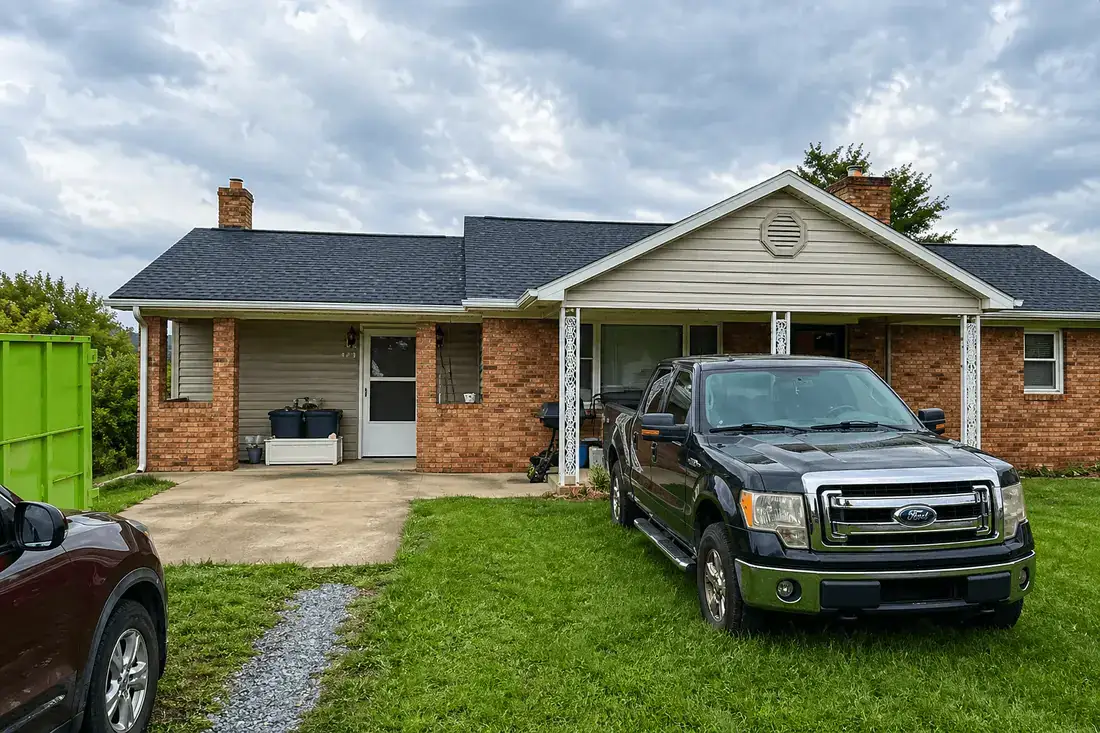
The home had been vacant for two years with break-in damage. We bought it as-is and handled every legal step remotely.
Common questions
Do I have to be there for cleanout or repairs?
No. Once we close, the condition of the home is our responsibility. You don’t need to lift a finger or be present for any of the work.
Will an as-is offer be lowball?
It should be a genuine, explainable number — not a random figure. An as-is cash offer is typically below full retail because the buyer is taking on the repairs, the holding costs, and the risk. Whether that trade-off is worth it depends on your situation, which is exactly why it’s worth comparing your options honestly before deciding.
Is as-is my only choice if my house needs work?
Not necessarily. A cash sale is the simplest path, but depending on your equity and timeline, an equity-protection or even a traditional listing route might net you more. Because we’re led by a licensed Virginia Realtor, we can walk you through all three so you pick the one that actually fits.
The bottom line
If your property needs work you’d rather not take on, a genuine as-is cash sale can be the cleanest, calmest exit available — no repairs, no cleanout, no showings, and no last-minute renegotiation. The right buyer will still close it properly, explain every number, and let you set the pace.
When you’re ready, reach out for a free, no-obligation cash offer. You’ll get straight answers with no pressure, and a response within 24 hours. Call or text (540) 746-1323 whenever it’s convenient for you.